
Nigeria
National Symbols
The flag, the coat of arms, the anthem — and the meaning carried in each.
The National Flag
Green for the land. White for peace.
The Nigerian flag was designed in 1959 by Michael Taiwo Akinkunmi, then a 23-year-old student, who won a national competition for the best flag design. Its three vertical bands carry the nation's story in two colours: green for Nigeria's wealth and rich natural resources, white for peace and unity.
It was first raised on Independence Day — 1 October 1960.
Proportions 1:2 · adopted 1 October 1960
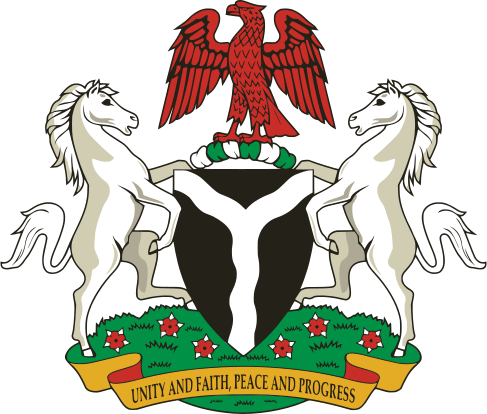
The Coat of Arms
Adopted May 1960.
The black shield
Nigeria's fertile soil
Two white horses
Dignity
The red eagle
The strength of the nation
The white “Y” on the shield
The rivers Niger and Benue, meeting
The yellow trumpet flower
Costus spectabilis — the national flower, for the beauty of the country
The wreath
Crowning the shield, echoing the rich soil
National Motto · adopted 1978
“Unity and Faith, Peace and Progress”
The National Anthem
“Nigeria, We Hail Thee”
Nigeria's original independence anthem of 1960 was readopted on 29 May 2024, replacing “Arise, O Compatriots”, which had served as the national anthem from 1978 to 2024.
The Land
923,768 km²
Thirty-six states and the Federal Capital Territory, from the Gulf of Guinea coastline to the Sahel — bordered by Niger, Chad, Cameroon and Benin.
View the full national map