
Nigeria
Culture & Heritage
Over 250 ethnic groups; centuries of artistic genius. Nigeria is regarded as the principal trustee of the most durable fruits of black artistic achievement.
Arts & Antiquities
Two and a half millennia of artistic genius
500 BC – 200 AD
Nok Culture
The oldest sculptures found in Nigeria — terracotta figures and figurines from the Southern Zaria and Benue areas of central Nigeria. The Nok people knew iron smelting, and adorned themselves with tin and stone beads, earrings, nose-rings and bracelets.
9th Century AD
Igbo-Ukwu
Bronze casts first uncovered in 1938 in the village of Igbo-Ukwu near Awka: staff heads, crowns, breastplates, pendants, ornaments, anklets, wristlets and chains — evidence of a sophisticated casting tradition a thousand years old.
12th – 15th Century
Ife
The ancient Ife people produced works in bronze, copper and terracotta whose naturalism stunned world art critics when they came to light in the early 20th century.
From ~1400 AD
Benin
The best-known Nigerian artworks. Tradition holds that Benin learned bronze casting from Ile-Ife under Oba Oguola, the sixth King of Benin. In 1897 a British punitive expedition shipped over 2,000 Benin bronzes and ivories to England, later dispersed across Europe and America.
Festivals
A calendar of colour
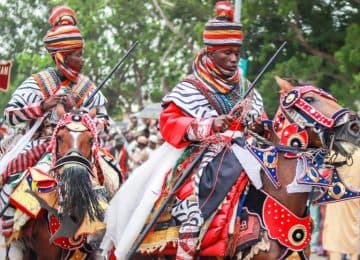
Durbar
The northern Emirates — Katsina's is the most magnificent
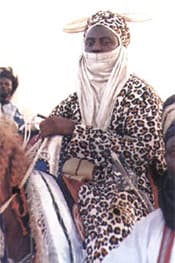
Born of the Emirates' cavalry centuries ago, the Durbar today honours visiting Heads of State and marks Id-el-Fitri and Id-el-Kabir. Horsemen charge across the square to salute the Emir with raised swords, climaxing with the Emir's household guard — the Dogari — amid drumming and dance.
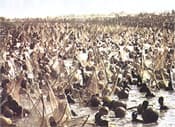
Argungu Fishing Festival
Argungu, Kebbi State · held February–March
Since 1934, hundreds of men and boys enter the river with great fishnet scoops, urged on by drummers and gourd-rattlers. Canoe racing, wild-duck hunting, bare-handed fishing and diving — and giant Nile Perch brought ashore.
Eyo Festival
Lagos Island
Unique to Lagos and widely believed to be a forerunner of the Brazilian carnival. On Eyo Day the highway from Carter Bridge to Tinubu Square closes for a white-robed procession from Idumota to Iga Idunganran, in homage to the Oba of Lagos.

Sharo Festival
Fulani communities
A Fulani initiation of endurance: bare-chested unmarried men enter the ring, and each must bear his challenger's flogging without wincing — to drumming, singing and self-praise.
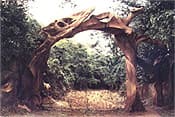
Osun Festival
Oshogbo, Osun State
Osun, wife of Sango, is worshipped along the river that bears her name — said to make barren women fertile. Her most important sanctuaries stand in Oshogbo, centred on a palace shrine.
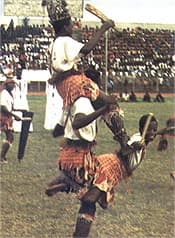
The Atilogwu Dance
“Is this magic?”
That is what “Atilogwu” means — and what audiences around the world ask of the Igbo dance of Anambra State: a vigorous art form combining gymnastics with foot-stomping rhythms and brilliant colours, performed by rigorously trained young men and women at festivals and great occasions.
Crafts & Heritage
Made by hand, kept for centuries
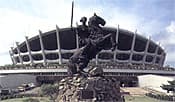
The National Museum, Onikan
One of the largest collections of art and artifacts in Nigeria, spanning 500 BC to 200 AD — including the Nok terracotta heads — with sister museums in Benin, Jos, Ife, Esie, Kano and Kaduna.
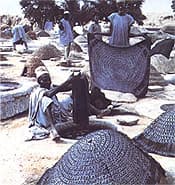
The Kano Dye Pits
In the old city, fabric is folded into designs before indigo dyeing, then beaten to a shiny, iridescent finish — ancient techniques still unmatched anywhere.
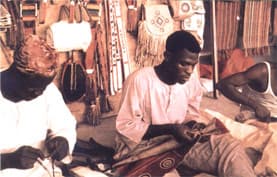
Leather, Bronze & Calabash
Nigerian artisans carve wood, cast metal, craft jewelry and traditional clothing, decorate calabashes and produce finely worked leather prized far beyond the country.